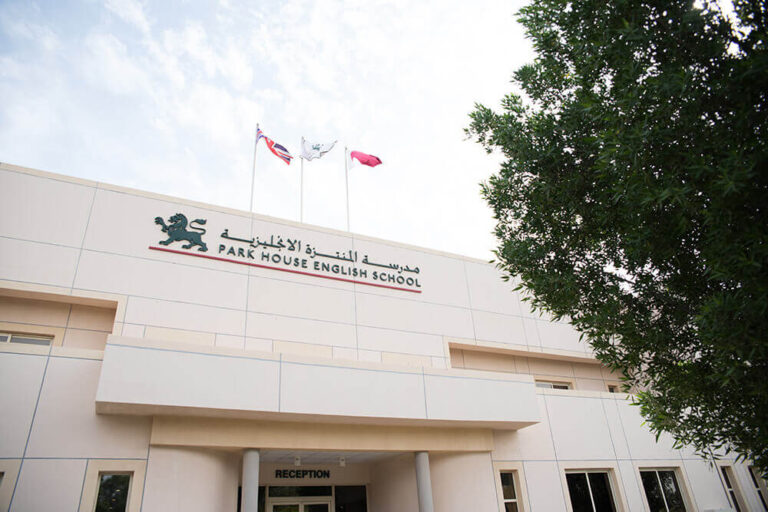
In this insightful piece, John Smith, Principal of Park House English School and Board Member of the British Chamber of Commerce Qatar, explores the critical position schools occupy during periods of uncertainty.
He outlines the three guiding principles behind their effective response—continuity of learning, clarity in communication, and care for both students and staff—highlighting how schools are essential anchors for families, the business community, and the wider economy.

John Smith writes…
In periods of instability, schools occupy a uniquely important position within the education sector, the business community and wider society. They are not only centres of learning, but critical points of stability for families, employers and the broader economy.
At Park House English School, our response has been guided by three principles: continuity, clarity and care.
Continuity of learning is essential for young people under all circumstances. Any disruption to school life is not simply a matter of lost curriculum time; it affects routine, structure and students’ sense of progress. In Qatar, where recent events have necessitated an immediate transition to distance learning, we were able to move seamlessly to remote provision, followed swiftly by live, teacher-led lessons.
This agility is not accidental. One of the lasting legacies of the COVID-19 pandemic has been the accelerated development and integration of educational technology. The investment made in platforms, pedagogy and the capability of our staff during that period has ensured that schools are now far better equipped to respond to disruption without compromising the quality of learning. What would once have taken weeks to establish can now be implemented with relative immediacy.
However, it is important to recognise that this is not the first period of disruption our students have faced over the past 12 months. Young people in Qatar have experienced multiple episodes of regional tension. The cumulative psychological impact of this, particularly for those undertaking external examinations, should not be underestimated. Schools therefore have a dual responsibility: to maintain academic momentum whilst also providing reassurance, routine and a strong pastoral framework.
Alongside this sits an equally important responsibility to our staff. Many colleagues in international schools are living and working away from their families, and periods of uncertainty can heighten feelings of vulnerability and isolation. Supporting staff wellbeing is therefore critical to sustaining the quality of provision for students. In our context, being part of a schools group has been invaluable. Access to regional and central support structures, including external counselling services, has enabled us to provide additional layers of care and reassurance for our staff during this period.
Clarity in communication is equally critical. In fast-moving situations, uncertainty can quickly lead to speculation. In an environment where information comes from multiple sources with varying credibility, schools must act as trusted sources of information, providing measured, accurate and timely updates to families. The immediacy of information means that schools may receive vital updates at the same time as parents. This presents a challenge for school leaders, but consistency is vital, not only for reassurance but for enabling parents, many of whom are key members of Qatar’s professional and business communities, to plan effectively.
There is also a wider implication for the international education sector and its stakeholders. The impact of disruption is not uniform across countries. Differences in term dates and government directives mean that students in Qatar, for example, may experience different periods of distance learning compared to peers elsewhere in the region. This creates an inherent imbalance in learning time and experience, which must be carefully considered by examination boards and regulators. A standardised response to an uneven situation risks compounding disadvantage. If all students are treated the same on paper, despite having experienced very different levels of disruption, those who have lost more learning time or faced greater challenges are effectively placed at a disadvantage through no fault of their own.
For the business community, the role of schools in such moments should not be overlooked. The ability of schools to provide continuity and reassurance directly supports business continuity. When parents are confident that their children’s education and wellbeing are being effectively managed, they are better able to focus on their professional responsibilities. At the same time, schools recognise the vital role parents play during periods of distance learning; supporting routines, encouraging engagement and helping to sustain a focused learning environment at home. This partnership is critical to ensuring that remote provision is effective.
We are now preparing to resume face-to-face learning on Sunday, in line with government guidance. The necessary safety protocols are in place, and we are ready to welcome students back into school. This return to routine is important not only for academic progress but also for students’ well-being, sense of stability, and connection to their peers and teachers. At the same time, we remain realistic about the context in which we are operating. We will continue to monitor the situation closely and retain the flexibility to adapt our approach as required, ensuring that we can respond quickly and effectively to any further developments.
Ultimately, the role of a school in times of uncertainty is to lead with calm authority, act with precision, and remain firmly anchored in its core purpose. In Qatar, schools are operating at the centre of the response to these regional events, not at the periphery.
By maintaining high-quality learning, supporting wellbeing, and communicating with clarity, schools contribute not only to educational continuity but to the resilience and confidence of the wider community.